
The used Hyundai transmission market reflects a brand story that is genuinely one of the more interesting in modern automotive history. Hyundai arrived in the American market in the late 1980s with vehicles whose quality was widely mocked, spent the following two decades executing one of the most successful quality turnaround programs in automotive history, and now produces vehicles that regularly outperform traditional competitors on reliability metrics. The transmissions in modern Hyundai vehicles are part of that quality story, but they also carry specific technical requirements and documented characteristics that owners need to understand before they need to understand them, meaning before the transmission fails and urgency compromises decision-making quality.
This guide is written for Hyundai owners who want to understand their transmission completely, whether they are currently facing a repair decision or simply want to be prepared. It covers the transmission systems that matter most in Hyundai's current and recent lineup, explains what actually causes failures in honest terms, and gives you the specific knowledge needed to evaluate a used replacement intelligently.
What Transmission Does Your Hyundai Actually Use?
Hyundai's lineup spans a range from the compact Elantra and Accent through the mid-size Sonata and Santa Fe to the three-row Palisade and the performance-oriented Elantra N and Veloster N. Each segment uses transmission technology calibrated for its specific performance, efficiency, and application requirements, and the distinctions between them matter for maintenance and replacement decisions.
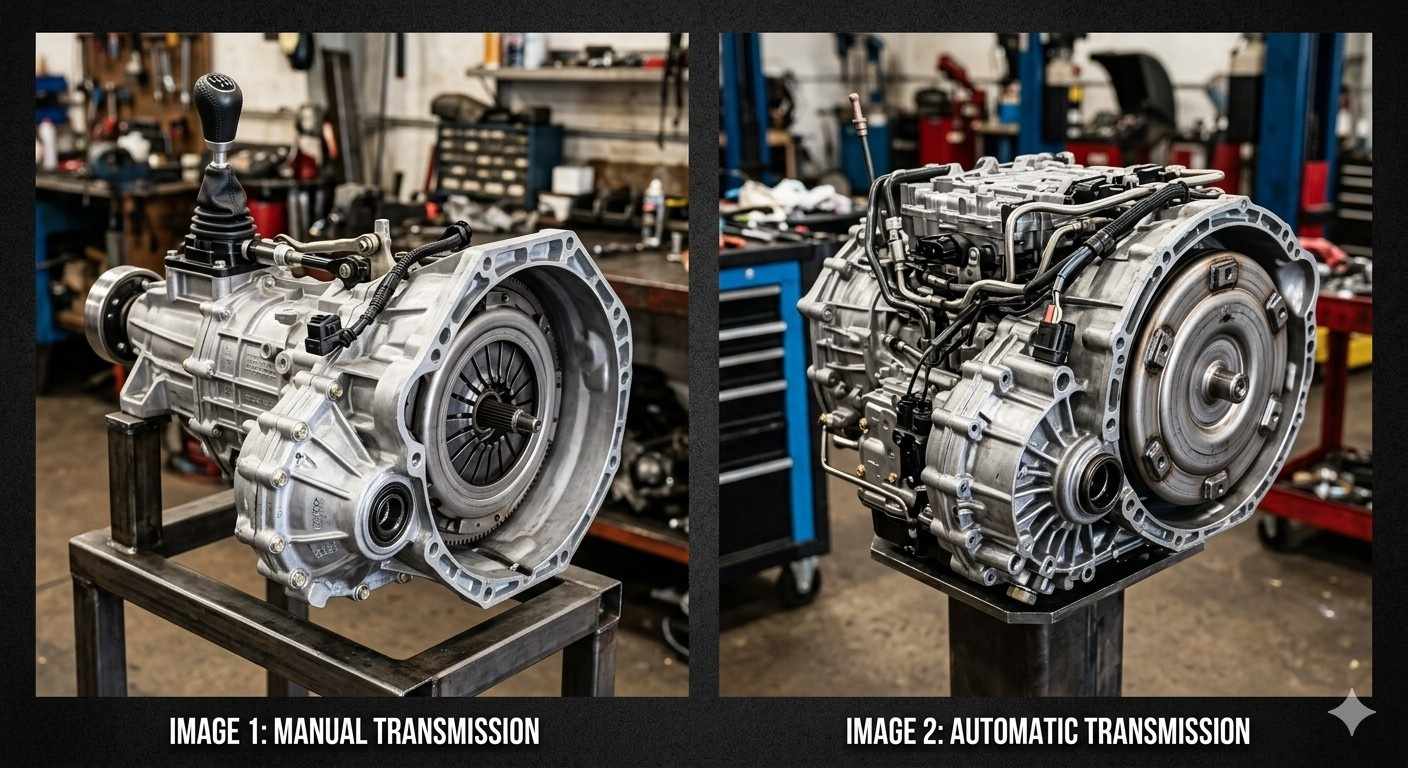
The mainstream Hyundai sedan and crossover lineup, including the Elantra, Sonata, Tucson, and Santa Fe, uses the A6MF1 or A6MF2 six-speed automatic as the primary conventional automatic option. These are well-regarded units that deliver smooth, efficient performance when maintained with the correct Hyundai SP-IV ATF. The A6MF1 and A6MF2 are closely related, with the A6MF2 representing an evolutionary update with improved torque capacity. Both are shared with Kia applications on the same platforms, which broadens the donor vehicle pool when searching for used replacements.
Many current Hyundai models use a 7-speed dual-clutch transmission (DCT) across front-wheel-drive applications in the Elantra, Sonata, and Tucson. The wet DCT used in these applications is distinct from the dry DCT designs used in some other manufacturers' vehicles and is generally less susceptible to the low-speed hesitation complaints that dry DCT designs generate. Hyundai's wet DCT uses its own specific DCT fluid and has generated a generally positive reliability record since its introduction.
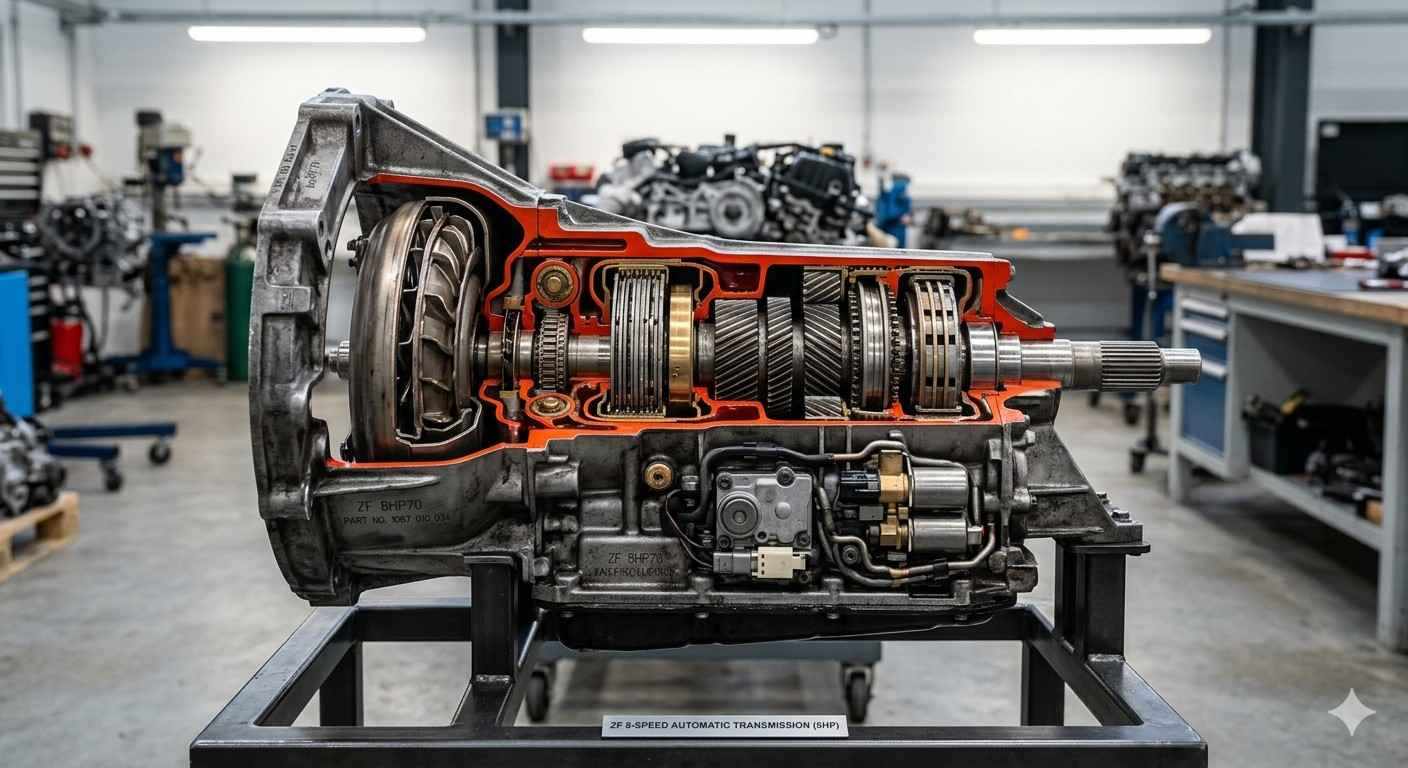
The Hyundai Palisade and Santa Fe in all-wheel-drive configurations use an 8-speed automatic transmission that represents the current state of the art in Hyundai's drivetrain technology. This sophisticated unit delivers broad ratio spread, excellent efficiency, and smooth shift quality that reflects the refinement level appropriate for Hyundai's premium family hauler segment.
The Hyundai Kona and Ioniq in hybrid and electric configurations use electric drive units and eCVT systems that are separate from the conventional transmission market and have their own specific service and replacement considerations.
What Actually Causes Hyundai Transmission Problems?
This question deserves a direct answer rather than a general survey of symptoms, because understanding root causes is what allows owners to prevent problems and make informed repair decisions.
The most common cause of Hyundai six-speed automatic transmission problems is degraded SP-IV ATF fluid. This is not unique to Hyundai. It is the universal story of automatic transmission maintenance across virtually every manufacturer. But the specific consequences of SP-IV degradation in Hyundai's A6MF1 and A6MF2 units follow a predictable pattern that is worth understanding in specific terms.
SP-IV is a Korean-specification ATF formulated for the friction characteristics of Hyundai and Kia clutch pack designs. As it degrades through thermal cycling and contamination, it loses the precise friction modifier properties that allow the clutch packs to engage and disengage cleanly. The first symptom is usually a harsh 1-2 shift, which appears because the first-to-second clutch engagement becomes inconsistent as the fluid loses its ability to modulate the engagement pressure smoothly. As degradation continues, delayed engagement from Park to Drive appears, solenoid contamination develops from suspended wear particles in the degraded fluid, and eventually clutch pack wear follows from metal-to-metal contact events during inconsistent clutch engagement.
The entire progression from early harsh shifts to eventual mechanical failure typically takes place over a period of 40,000 to 80,000 miles in vehicles where fluid was never changed, and it is essentially preventable with a fluid change every 40,000 to 60,000 miles using the correct SP-IV specification.
The second common cause of Hyundai transmission problems is the dual-clutch hesitation complaint in DCT-equipped models. This manifests as a pause or jerk during low-speed acceleration, particularly when pulling away from a stop in traffic. Hyundai has issued TCU software updates for multiple DCT applications that substantially improve this behavior. The hesitation is almost universally a software calibration issue rather than a mechanical failure, and owners who attribute it to a failing transmission and pursue replacement before attempting the software update are solving the wrong problem expensively.
How Does the Hyundai Warranty History Affect Your Thinking?
Hyundai's approach to warranty coverage is relevant context for used transmission buyers because it tells you something about the manufacturer's confidence in its products and the expectations you should have for longevity.
Hyundai offers one of the most comprehensive powertrain warranties in the industry at 10 years or 100,000 miles on the powertrain for the original owner. This warranty covers the transmission and reflects genuine confidence in the durability of these units when properly maintained. The coverage transfers in reduced form to subsequent owners, typically at 5 years or 60,000 miles from the original sale date.
For owners purchasing used Hyundai transmissions, the warranty history of the donor vehicle matters. A transmission pulled from a vehicle still within its original powertrain warranty period that was removed due to accident damage or another non-transmission reason has a different implied quality assurance than one removed from a vehicle that exceeded its warranty coverage.
What Does SP-IV ATF Cost Versus What Transmission Replacement Costs?
This comparison deserves explicit statement because it motivates the maintenance behavior that prevents the majority of Hyundai automatic transmission failures.
A Hyundai six-speed automatic transmission fluid service using SP-IV ATF at an independent shop costs $100 to $200 depending on the service scope and local labor rates. A complete transmission replacement, whether with a quality used unit or a remanufactured unit, costs $2,500 to $5,000 total including installation labor. The ratio between these costs is approximately 15 to 25 to one in favor of maintenance. A fluid change every 40,000 miles performed three times over 120,000 miles costs $300 to $600 total and prevents a $2,500 to $5,000 repair in the overwhelming majority of cases where that repair would have been required.
This arithmetic makes SP-IV fluid changes at appropriate intervals the single best return on maintenance investment available to any Hyundai automatic transmission owner.
What Is Realistic Pricing for Used Hyundai Transmissions?
Six-speed automatics from Elantra, Sonata, or Tucson applications run $400 to $1,100 for quality used units. Eight-speed automatics from Palisade or Santa Fe AWD applications run $700 to $1,800. DCT units from Elantra or Tucson applications run $500 to $1,200. Remanufactured six-speed units run $1,500 to $3,000 and represent the most reliable option for owners who want maximum longevity and warranty coverage.
Installation labor runs $700 to $1,400 for most front-wheel-drive Hyundai applications. All-wheel-drive Tucson and Santa Fe installations are more complex at $900 to $1,600.
Frequently Asked Questions
Is Hyundai SP-IV ATF the same as Kia SP-IV ATF? Yes. Both brands use the same SP-IV specification and the fluids are interchangeable. They are marketed under different brand names but are the same formulation.
My Hyundai Tucson DCT hesitates when pulling away from a stop. Is the transmission failing? Almost certainly not. DCT hesitation in Hyundai applications is almost universally a software calibration issue addressed by a TCU update available from Hyundai dealers. Request this update before pursuing any mechanical diagnosis.
Can I use an SP-IV-RR fluid in a transmission that specifies SP-IV? Check the specific requirements for your model year and transmission code. Some applications distinguish between SP-IV and SP-IV-RR as specific but related formulations. When in doubt, use the specification listed in your owner's manual or consult a Hyundai dealer.
How do I know if a used Hyundai six-speed automatic has good fluid history? Ask the seller for fluid service documentation, request photographs of the fluid at the time of removal, and look for the characteristic clean red color and absence of metallic particles. Dark, burnt-smelling fluid with metallic contamination is a disqualifying finding regardless of stated mileage.
Is the Hyundai 8-speed automatic in the Palisade reliable? Yes, it has a generally positive reliability record. The primary maintenance requirement is SP-IV or the specific ATF variant listed for this application changed every 40,000 to 60,000 miles.
Turbo Auto Parts Is Your Source for Quality Used Hyundai Transmissions
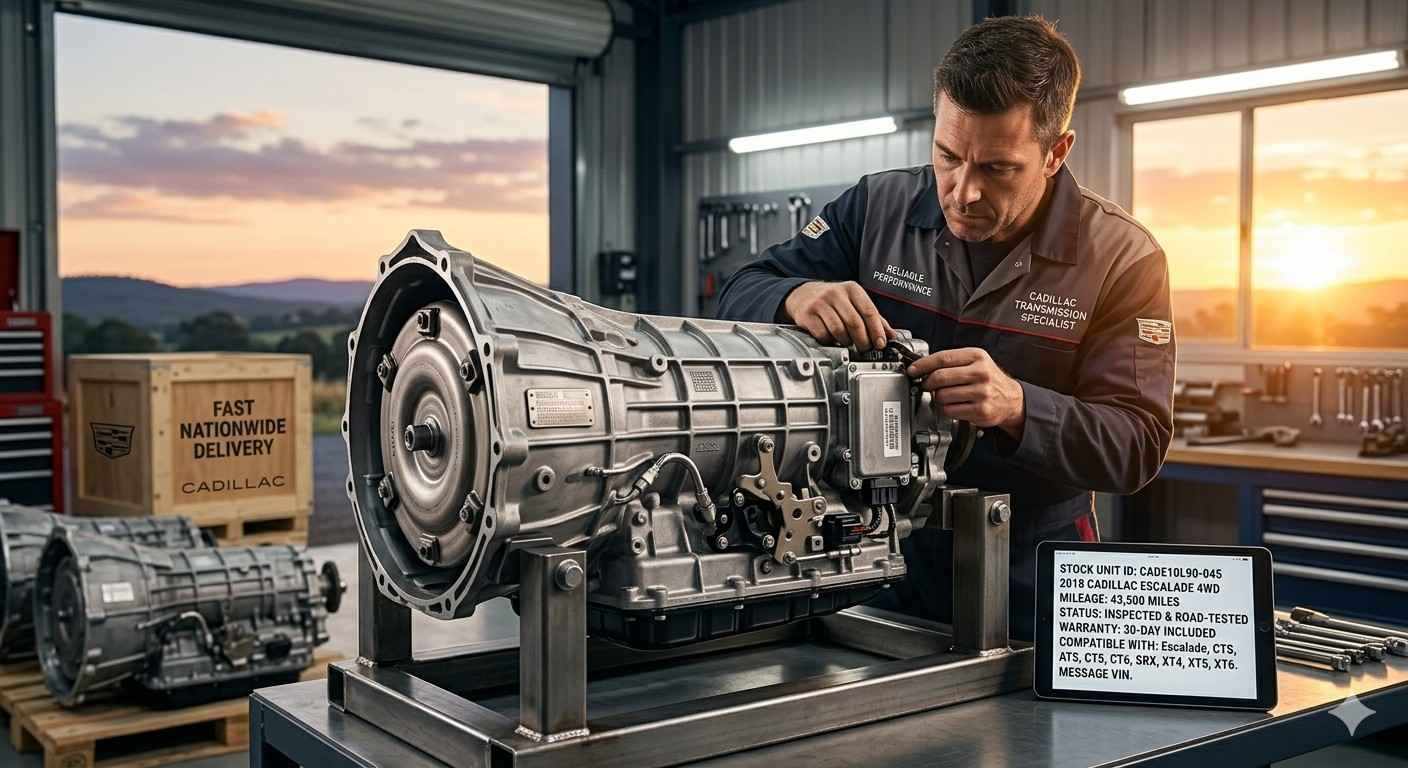
When you need a used Hyundai transmission backed by documentation standards that match what Hyundai's engineering actually delivers when properly maintained, Turbo Auto Parts provides exactly that. Our inventory covers the A6MF1 and A6MF2 six-speed automatics for Elantra, Sonata, and Tucson applications, the eight-speed automatics for Palisade and Santa Fe AWD, and DCT units for performance and sport applications. We leverage the Hyundai and Kia platform sharing relationship to provide access to a broader compatible donor inventory. We stock SP-IV ATF, solenoid kits, and complete remanufactured units for owners who want the most comprehensive warranty coverage available. Our Hyundai drivetrain specialists verify compatibility with your specific VIN before every order. Contact Turbo Auto Parts today and find the used Hyundai transmission that restores your vehicle to the reliability standard Hyundai's engineering is capable of delivering.

Write a comment ...